
Home » Okategoriserade (Page 2)
Category Archives: Okategoriserade
Was it a Warcrime or not?
A discussion I had with a person on Facebook forced me to write this article. The discussion we had was an alleged massacre that was allegedly carried out by the SS-Regemente “Deutschland” in April 1941. The reason I write alleged is for several reasons. I will now demonstrate here why this article is incorrect and that I believe that the alleged research the author is said to have carried out is very flawed.
He writes in the article that he will now identify the people who are supposed to have carried out the alleged massacre. However, my research shows that he has missed several essential pieces and people who would later be of interest. He also writes that he has researched this matter for five years, despite this, he has not retrieved the documents that are found in the former office for the Investigation of Crimes Committed by National Socialism in Ludwigsburg. After about 45 minutes after we received these three folders from the Bundesarchiv, we immediately saw that his story does not hold up. Which is perhaps why it only circulates on ONE page of all on the Internet and the person’s own Facebook page, from which I am are banned after I started questioning the alleged massacre.
But BEFORE I start going into details, I still want to EMPHASIZE that of course the Waffen-SS committed war crimes, and also crimes against humanity, but I still believe that it is IMPORTANT that we reproduce these crimes in an adequate and correct way, because if not, this is how future researchers will be just as quick as I was to get the contradictory information and be able to point to this falsification and say “look they are lying about this, what else are they lying about?”. Enough about this, let’s get into the details!
The author claims that over 200 people were massacred in Alibunar on April 12, 1941, the Yugoslav authorities found out that there were 96 victims in total, where the author got the 200 victims from is unknown to us, he claims that there is a “Commission for the Investigation of the Crimes of the Occupiers”, is this commission supposed to work through the prosecutor in Yugoslavia? He offered to show the list, but we already have the list from the Yugoslav prosecutor, which today is preserved in the Bundesarchiv, among other things. I know that much of his so-called research leans towards the information of a Serbian researcher, I take these with a pinch of salt as they clearly show the same ignorance that the author has shown.
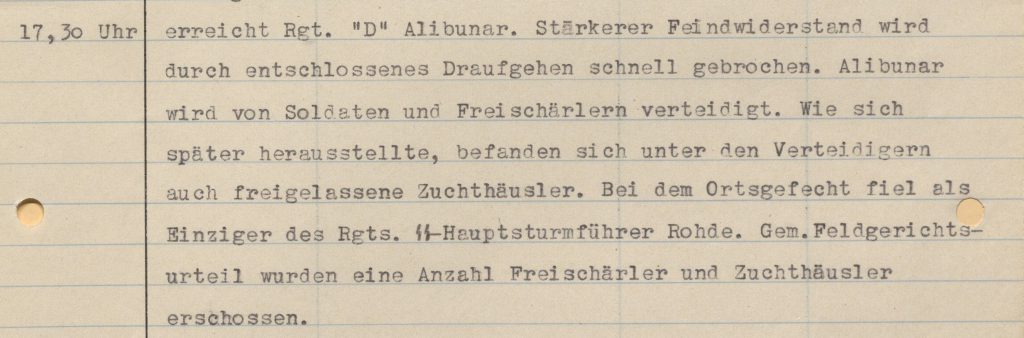
A point that has been VERY important and that is WHY a number of people were executed in Alibunar in April 1944, because it was done, no doubt about it, SS-Rgt. Deutschland has even noted it in his war diary from this day (April 11). The reason is very simple, the majority of those who fought against the German troops in Alibunar in April 1941 were so-called “Freischärler” which is the German term for partisans, or people who in civilian clothes take up the fight against armed troops. According to the Haug Convention (from 1907, it was changed again in 1949 and 1961) people who take up arms against a warring party in civilian clothes have no protection, they are completely at the mercy of the enemy and they were fully entitled to execute them. As I emphasized to the author several times – Morally wrong but legally correct! The author could have quickly found this information if he had used Google. I also tested this thesis on a couple of people I know, one of whom is a former police officer and the other works as a prosecutor, a neighbor of my old mother. Both said in unison – The matter is clear, Partisans, nothing to think about.
Furthermore, we can read in his story that what triggered the battle itself was a young man who shot SS-Rgt. “Deutschland” adjutant SS-Hstuf Paul Rohde, this young man was a civilian and shot Rohde in the chest after he stepped into a tavern. Although the Serbian researcher claims that the German troops fell in rows in the battle against the Yugoslavs. The only victim noted for SS-Rgt- “Deutschland” is precisely SS-Hstuf Rohde. When we search the Volksbund, we also do not get any other victims. Which is Point number 2 where I noticed that their story is not up to par.
The author points out SS-Rgt. “Deutschland” as the unit that is supposed to have carried out all the “crimes”, we look in the War Diary of the SS-Div. “Reich” for this day and we find the following units that are supposed to have been at Alibunar on April 11, 1941 – Divsion gefechstand (Div. Staben) SS-Nachrichten Abteilung 2, IV./SS-Art.Rgt.2 parts of the SS-Aufklärungsabteilung (SS-A.A.2) and large parts of the SS-Infanteriedivision “Grossdeutschland”. The prosecutor in Ludwigsburg tried to obtain the war diary from “Grossdeutschland” for these days in 1941 without success, according to the Militärarchiv in the Bundesarchiv in Freiburg these no longer exist. So who carried out the executions? I emphasize again, they were legal!
We look at the next point, the people he points out are the following people: SS-Rgt. “Deutschland” Rgt.Chef Wilhelm Bittrich, the head of the 9th Company in SS-Rgt. “Deutschland” Hans Joachim Woith, the latter the author points out as a former brutal SA man who was raised by Theodor Eicke as part of the SS-Totenkopfverbände. What he misses or if he chose to turn a blind eye to the facts is that we can read in Hans Joahcim Woith’s SS-Officer file that until September 20, 1938, he served in the SS-Totenkopfverbände (Thuringia), then he was transferred to the regular army in which he would then serve as Company Commander of an M.G.Company at Infantry Regiment 94 for almost a whole year. After his time in the Wehrmacht, Woith returned to the SS-V.T. now as tactics and battalion commander of the platoon command school in the SS-Übungslager Dachau, where he was for 10 months before being transferred to the SS-Junkerschule Braunschweig and there working as a tactics instructor, after a short break as Company Commander at the 3.(Ersatz)Kompanie at the SS-Rgt. “Deutschland” he came again to the SS-Junkerschule Braunschweig to work again as a tactics instructor. Only on the last of June 1940 he leaves the SS-Junkerschule Braunschweig and comes to the SS-Rgt. “Germania”. SS-Brig.fhr Demelhuber writes the following in a statement about Woith: A decent character, a bit restless, Very good general knowledge, good military theoretical knowledge, not quite finished with the practical skills. This does not sound like a brutal SA-Man if one can read his SS Officer file.
Then the author points out Werner Damsch and Karl Gelschheimer, however he writes that it is not certain that they were present at the execution, but still he chooses to mention them, why is unknown to us.
He points out the of III./SS-Deutschland” Heino von Goldacker who was the Ordonnance officer for III./”Deutschland”, as if an adjutant had given some orders. He conveyed orders. We believe that the author has stared blindly at the Stellenbesetzung that has been preserved for SS-Rgt. “Deutschland” for this particular period.
What really happened and that is documented in various documents, and we will now set them out point by point:
- – SS-Rgt- Deutschland and others arrive at Alibunar 17:30 on April 11, 1941
- – Fighting breaks out, SS-Hstuf Rohde is shot.
- – After about an hour the battle is over
- – Wilhelm Bittrich orders a number to be executed immediately, in our view in the heat of the battle and because he is upset about the death of SS-Hstuf Paul Rohde.
- – A court-martial is held, where a number are sentenced to death for participating in the battle as “Freischärler”
At lunch (11:30) on April 12, SS-Rgt. “Deutschland” leaves Alibunar, although the author writes in his story that the executions continued all night.
Viare writes that the SS-Div. “Reich” division judge did not come to Alibunar until April 13, if he had bothered to take out the files from the Bundesarchiv he would have seen that there was an SS judge on site, SS-Hstuf Hofmann. Vilekt was the one who set up the court to sentence the victims to death.
Furthermore, when we read further in the documents from Ludwigsburg, they carry out a number of interrogations, Bittrich, von Goldacker and others are interrogated, but not Damsch. But we read in the documents from Ludwigsburg and the Yugoslav prosecutor that the one they want to set up is SS Judge Hofmann, countless documents are about how he set up this court and whether he had any legal right to do so, that the prosecutor from Yugoslavia and Ludwigsburg would question the SS-Rgt- “Deutschland” right to execute “Freischärler” we do not find a trace of (600 pages)
One person, and that one of the follers will be about, which the author does not even mention by name in his article about the alleged massacre in Alibunar on April 11, 141, is the then SS-Ustuf Otto Skorzeny, this person the prosecutor in Ludwigsburg shows great interest in, even the Yugoslav prosecutor wants him extradited, now you have to consider that after the war, Yugoslavia requested that the Western Allies hand over all SS soldiers who fought in Yugoslavia, their trials after the war were a fars and most of those convicted were only scapegoats that the Yugoslav regime could show to its citizens. Again, the author had taken out the folders from Ludwigsburg, he had seen this information himself. I know in one of the discussions we had, the author tried to make it seem like “it was Germans at Ludwigsburg who were only trying to protect Germans”, this shows his total ignorance of what this office was really doing, they prosecuted a lot of people, but only when they knew they had a case they could win. If there were too many question marks, they let it go, but to claim that they “protected their own” is completely wrong! Also, many of the documents in these folders are documents from the Yugoslav prosecutor.
We must also note that the actions of the Infantry Division “Grossdeutschland” during these days are also something that the prosecutors and investigators at Ludwigsburg really tried to get to when they found signals that they should have shot people during the invasion of Yugoslavia, a personal opinion is perhaps that the Serbian researcher that the author leans against, has difficulty seeing the difference between “Deutschland” and “Grossdeutschland” both units wore this armband, even if the latter wore it on the right arm.
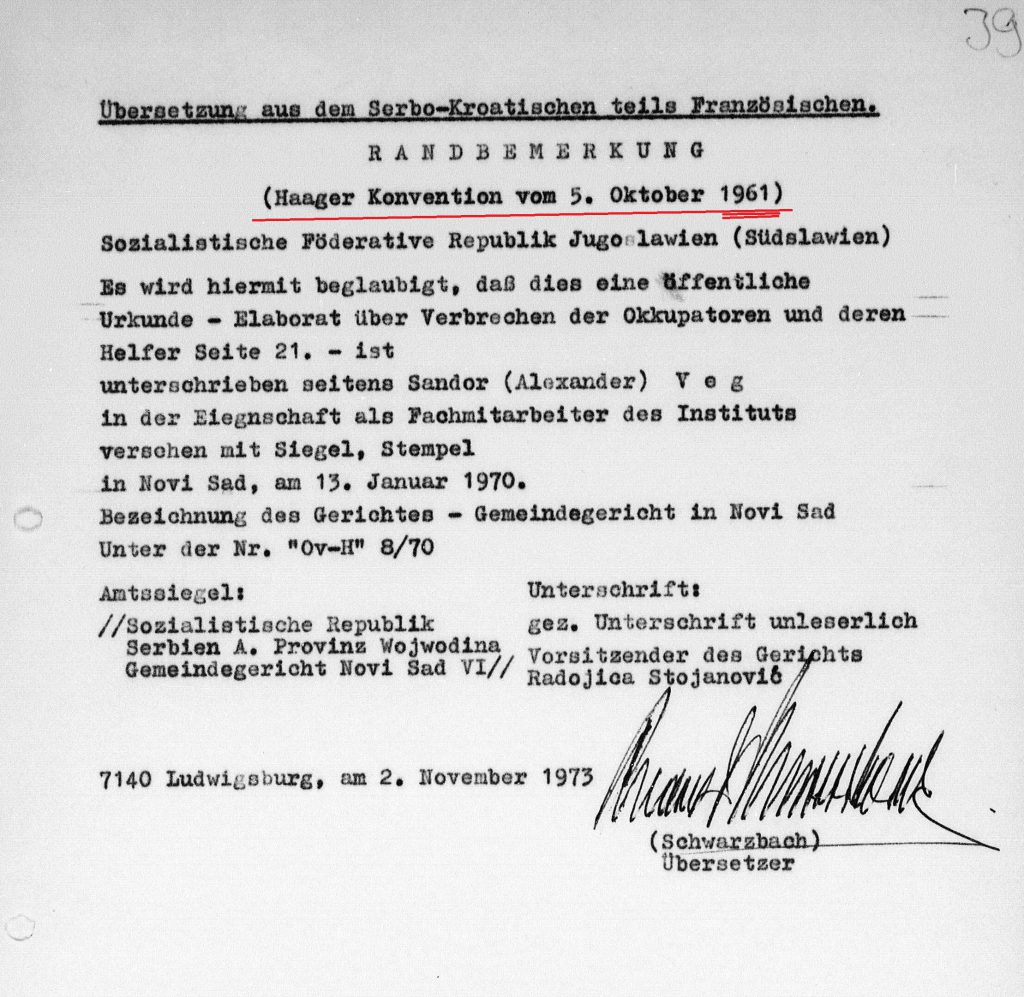
We must also note that the Yugoslav prosecutor wants to prosecute a large number of Germans, Croats, etc. with reference to the NEW Haug Convention, i.e. the one that came into force in 1961, a good attempt, but as far as I know, one cannot be convicted retroactively for something that was done BEFORE a law was enacted.
So the gist of what happened on April 11, 1941, morally wrong, but legally completely in order!
How to do your research part 3
Now we are in part three, in the first two parts we have covered important points when it comes to searching the Bundesarchiv. Now for a boring thing, the Bundesarchiv used to have a collaboration with Selke GmBH who copied files for you, for a cost of course. But you got what you ordered. For our part, this involved bringing home RuSHA files from Berlin Lichterfelde.
Since the turn of the year, the Bundesarchiv has ended the collaboration with Selke GmBH and they have introduced something called “Digitalisierung on Demand” (DoD), which means, if you are a registered user, that you can order files. Wow! Was my first thought, absolutely fantastic! BUT! Now we come to the bad part, you can only take home 10 acts in your registered area, and only ONCE, so if you, like us, are working on a big project, this was only a shot in the air, because what is 10 acts out of 1000 -numbers.
We have sent in an email to the Bundesarchiv with criticism, and that this was probably not the idea behind “DoD”, we are eagerly awaiting what they might write.
But to return to Invenio , our best stable tip is to start using “Navigierende Suche” and click your way forward, click in the box “Nur digitalisat anziegen” (show only digitalized) and you will get rolls that you can take home at once ( most often). It’s the only way to learn how the site works, because you can’t expect another researcher to do the work for you. Time is something that all researchers have too little of.
Learn where you can find different things, for those of us dealing with the Second World War, the “Norddeutscher Bund und Deutsches Reich (1867/1871-1945)” tab is the obvious choice, but then you also have a lot to find under “Nachlasse” but as I said, click through and learn the structure.
However, through a friend, over the weekend we came across a number of new groups on Invenio that we had missed, this meant that we have already brought home some Terrabyte of info, and have another 1000’s of pages to skim through. These rolls had a lot of info about RK, DkiG, Ehrenblatt, EK, KvK and other bits and pieces. Priceless in our opinion.
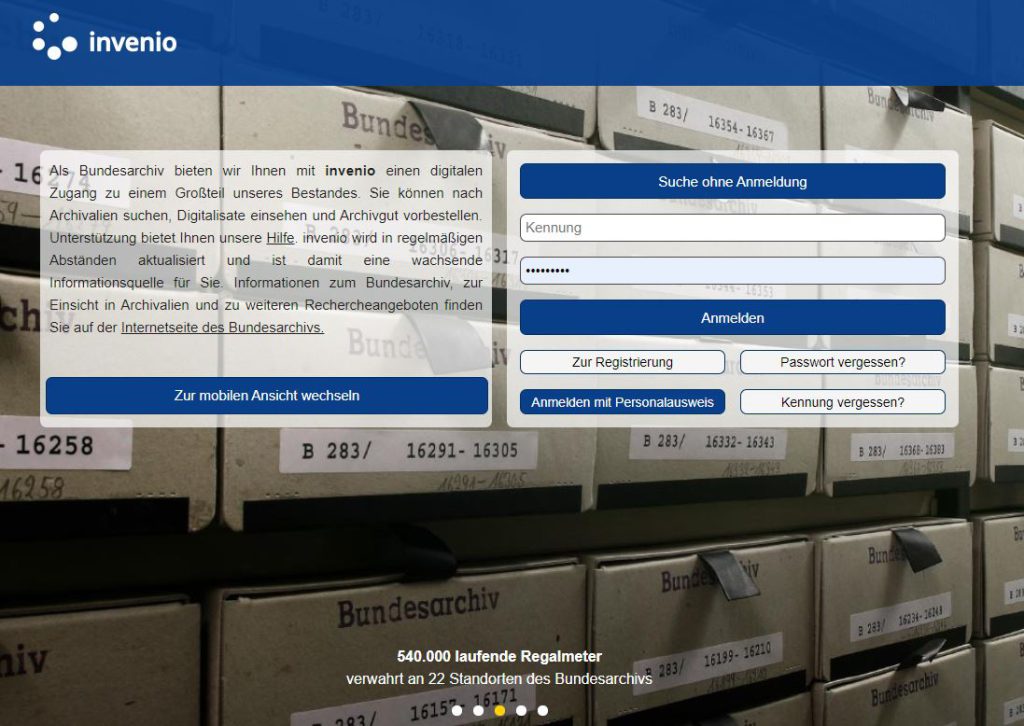
When you come to Invenio, you will see on the first page that you can “suche ohne anmeldung” which means that you can look around and download things that they have made available on the Internet. We use it when we search via mobile phone and are on the move.
Another hot tip, learn your username at the Bundesarchiv, you will need this when communicating with the Bundesarchiv. It’s a bit illogical username but it can be learned, because it’s ALWAYS BA. Since the year you registered, i.e. BA.2024.and then a six-digit number.
Now that you are sitting in the reading room of the Bundesarchiv and you have ordered a number of rolls, you can only order 40 files at a time, through the “merkzettel”, but if you, like me, have become a bit friends with the staff, you can submit an additional order when you are on site. The last time I was there I had a total of 60 rolls in two days. I found the staff at the Bundesarchiv to be very diligent. You then have a microfilm reader, where you either have 35 mm Microfilm or 16 mm. You load the machine and start searching, if you’ve been good and checked roughly where the information you’re looking for is on the roll, it’s quick. We who have the index of the RuSHA rolls knew exactly how many officers there were on each roll and where, hence we could manage as much as we did. Don’t waste tif and read on the spot, copy everything you can and then read at home in peace and quiet. Now if you don’t live near the Bundesarchiv and have all the time in the world. For us who live 1600 km from the Bundesarchiv, time is precious and do your homework!
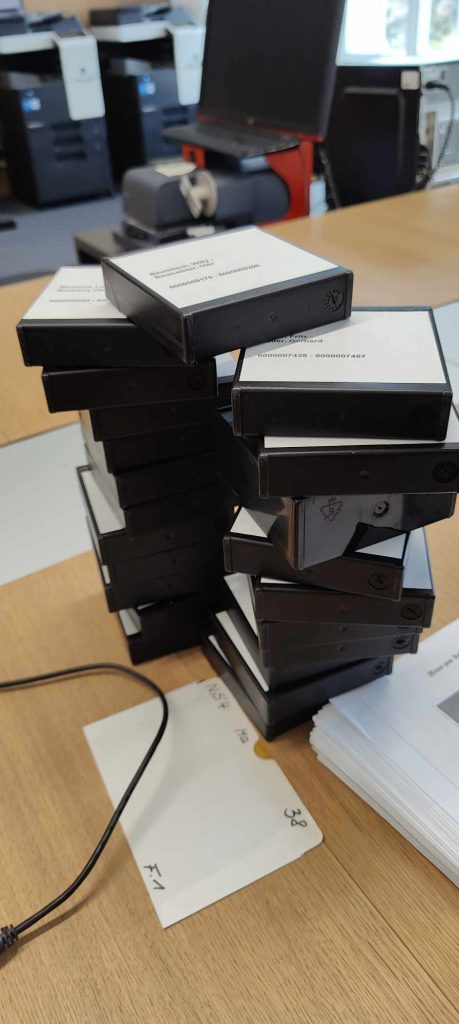
To look at the SS, you can download documents from all the “personnel files” without problems, bring some new usb sticks, the Bundesarchiv wants to check before you use them and then download. Acts with “sachakte” i.e. You are ABSOLUTELY not allowed to download SS-RuSHA digitally, the reason is simple, it is Germany’s privacy laws that come into force there. We have signed a document in which we commit, legally, not to disclose diseases, diagnoses, etc. that we get access to through the RuSHA files. On this point they are very strict, last winter when we were there shooting the screen, staff came to us and said “Herr Schwab, nur drücken” .. Yes, this has meant that we will soon have a running meter with RuSHA sterns here in our archive. Don’t be afraid of the cost, 367 pages cost us €12.80, which is nothing in the context.
In the next episode we check out the National Archives in the USA!
How to do research part 2
In the last post we went through how to use the actual search function on Invenio, I hope that gave you a little more meat on your bones.
We will now look at the “Navigierende Suche” function itself, for me it is especially one main group that is interesting and it is of course “Norddeutscher Bund and Deutsches Reich (1867/1871-1945) when you click there you get a lot of different groups, it is i.a. “Oberste Organe” Auswärtiges, Kolonial und Besatzungsverwaltung” etc.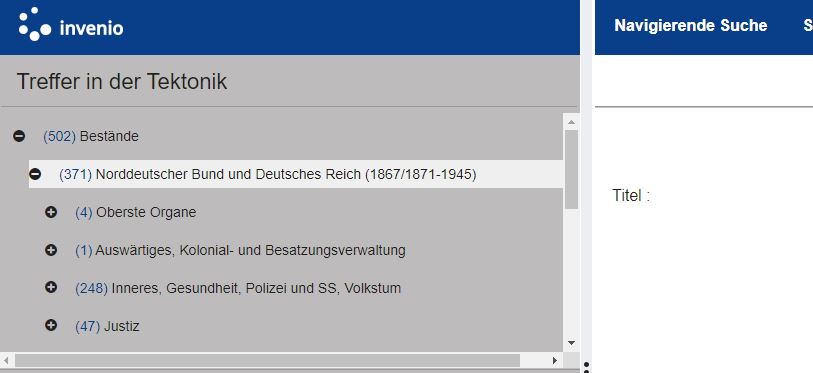
For me, who researches SS, the obvious cases are “Inneres, Gesundheit. Polizei und SS, Volksturm” but also “military” But in the first we find everything related to Allgemeine-SS but also subgroups such as R-70 which deal with equally occupied areas such as Poland, Denmark, etc. There you can find everything about the SS and Polizei. When you click on a group we choose e.g. “R 70 Poland Deutsche Polizeidienstellen in Poland”
Again we get information in the lower window, with the same text as the one we just clicked on ie “”R 70 Poland Deutsche Polizeidienstellen in Poland” click on the cross and you get a lot of new subfolders in this group, we now select group 2 “Polizeidienstellen im Reichsgau Danzig-Westpreussen”. Again we get new subfolders, now it starts to get interesting these are 2.1 “Höhere SS-und PolizeiFührer Weichsel”, 2.2 “Geheime Staatzspolizei (Gestapo) 2.3 Staatliche Polizeiverwaltung” 2.4 “Gendarmerie”.
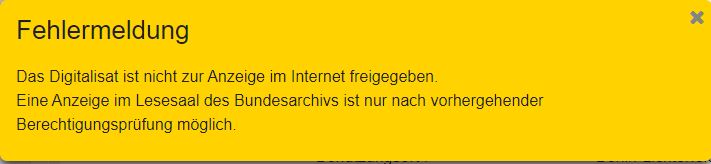
We select “Höhere SS….” Now we get a number of different folders that are stored under this heading, at first we get everything, even things that are NOT digitalized, but if you press the button “Nur mit digitalisat anziegen ” you get things that you can hopefully download at once. We do that and at the top right we now see “R 70-Polen/83″ Lagebericht des Einsatzkommandoes Bromberg insb, zu Kirchenfragen”. We try and press it to download the file. But then we get a yellow box that tells us that this particular folder is not available for download via the Internet. Oh well, we think, plus some profanity. But now it comes to a little secret, it is possible to get home just this folder. If you are registered as a user and have a username (See part 1) then you send an email to the Archive within the Bundesarchiv that it concerns, in this case “Berlin Lichterfelde” the address can be found under “Contact” then just ask for the file and ask them to send it to you via email. A few days or a week later, you will receive an email from the Bundesarchiv with a link and you can now download the desired folder. This particular service, I know from experience that not many people know that it is possible to get the folders that are NOT open via the internet.
But we click on, we check out “R 70-Polen/181 – Erlasse, insb. Einsatzbefehle” it was up for download and then just download the file that we told you about in Part 1.
Now it’s just for you to click around and look for files and folders that might interest you. If you are looking for documents relating to Heinrich Himmler and his personal staff, please scroll down to the sub-group “NS 19 Persönlicher Stab Reichführer-SS”
However, I can tell you that if you are looking for information about concentration camps, there is NOTHING public on the internet, this is due to the personal protection laws in Germany, they don’t want to hang out families, etc. so the only way to get them is to either order them via the “Bundesarchiv on demand” or go down yourself and check out the documents on site in Berlin. I did it last time in Berlin, they had a folder that gave the information about “Photos SS-Personal KL Mauthausen” this particular one was a deep disappointment, photos in useless quality and for me old cupboard food, I have all the photos but in perfect quality. But there’s no point in letting that knock you down, that’s part of the charm of research, sometimes you find a jewel in the archives or you find crap and you’ve wasted a little time,. But just go ahead and look.
I forgot one thing, make sure in to have proper data storage, because once you start downloading things, your hard drive space disappears at a furious speed. We have a NUMBER of hard drives and a hell of a lot of Terrabytes of documents in total.
End of part two…..
How to do your research – Part 1
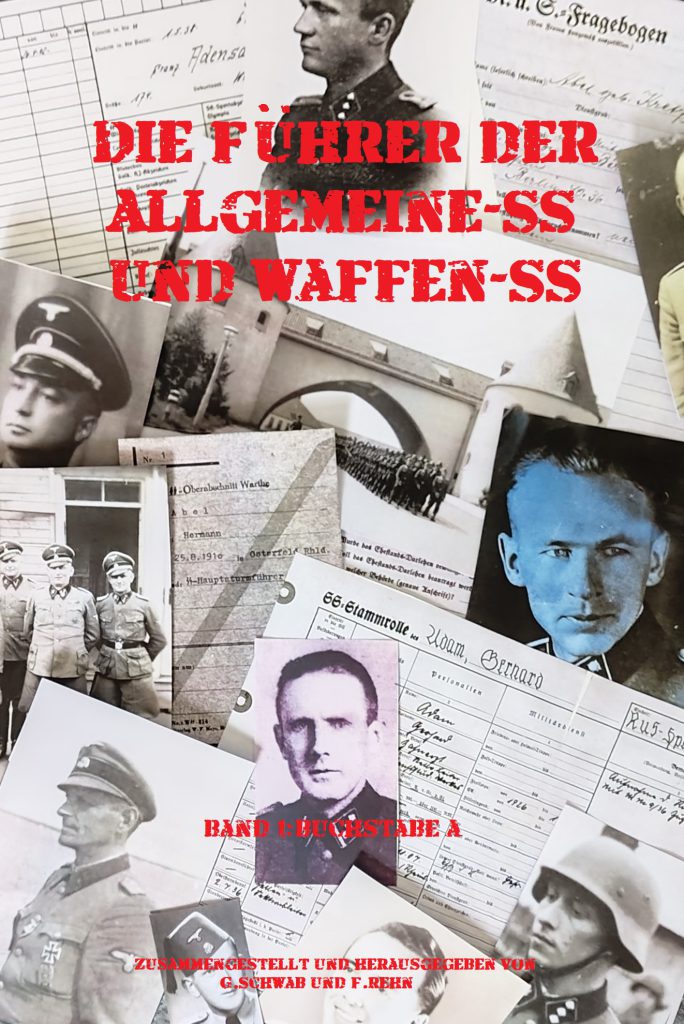
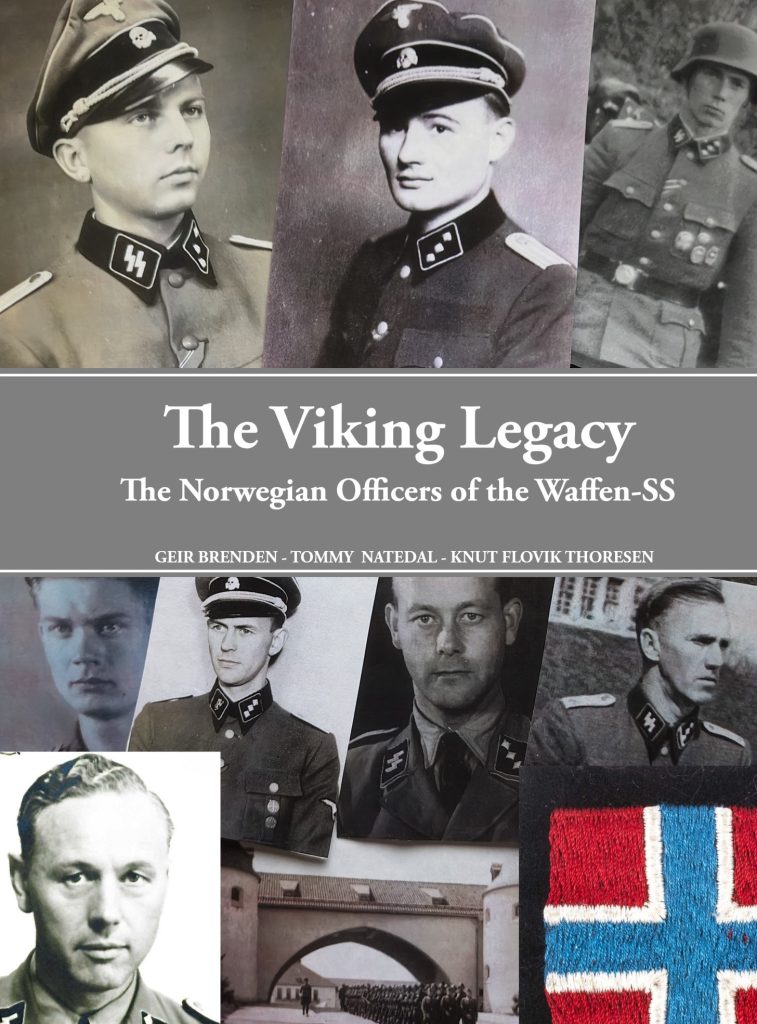
For many years we have been active in various archives and institutions to research our project to locate all officers in the SS and Waffen-SS. Through this, we have gained a fairly good knowledge of how archives and other things work. We will try to share our knowledge regarding different archives and what we have experienced over the years.
We start with the main and core of our research which is the Bundesarchiv in Germany.
To do your homework regarding the Bundesarchiv, you should first obtain a “Benutzer number”, i.e. a user name, to facilitate searches on the Bundesarchiv search engine Invenio. It is possible to search on Invenio without a username, but you cannot create a “Merkzettel” (Order list). It’s a bit bureaucratic to get a username, but it works. You can get a lot of follow-up questions regarding your research, I got a number of follow-up questions, I even had to submit an example of my research.
In our case, we had to fill in 5 different forms, mostly because we would get access to the files that are stored from the former SS-RuSHA (SS-Rasse und Siedlungshauptamt). We will return to why exactly this shortly.
But once you have a username you can start searching and looking for information, at first Invenio can be a bit difficult, but over time you have become quite a master of how the search engine works. If you press the search menu, you get 3 options. 1, Einfacher suche, simple search, there you can type in anything and search, but if, for example, you want to find the Verleihungslisten, you just type in that. In the left window you will then see where you can find the various “Verleihungslisten” in our case we then select “Norddeutscher Bund und Deutsches Reich (1867/1871-1945)” press the cross and then bring up a number of options, we select ” military” and then “Reichwehr und Wehrmacht 1919 bis 1945/1946” You can also select “Waffen-SS”, although there are only lists relating to 8.SS-Kav. Div and LSSAH. But we continue under the tab “Reichwehr…” then we select “Reichheer und Heer” which has 1386 hits on “Verleihungslisten”, then click on “Spitzenbehörden”, then on “Heerspersonalamt”. After you have done that, you will get up in the lower left field “RH 7 OKH/Heerespersonalamt” if you choose to press the plus there, you will get another tab called “Orden und Ehenzeichen”, then another step. “6.1 Verleihungslisten” which has 1363 hits, there you can then choose “6.1.1 Kriegsverdienstkreuz” or “6.1.2. Eisernes Kreuz” We choose “6.1.1. Kriegsverdienstkreuz” and now in the large field on the right you will see a lot of different lists, they are listed by unit. But to find the Waffen-SS lists, you then have to select far up on the page “Seite 1 von 7” you go to page 7 and voila there you find the “Verleihungslisten” for a lot of different SS-units. Choose which device you want to see, and then press “Digitalisat anziegen” you will get a new tab and at the top right you have an option “Download” if you want the whole documents you choose to download “Gesamte AE (Zip) ” and then press download start”
You will now receive a zipped file on your computer. Now it comes to a small problem with the Bundesarchiv, when you choose to unpack this zipped file, I recommend that you first create a folder just for this file, I build them up in the same way as the Bundesarchiv listed them, i.e. “RH 7_1779” I also add which unit it is, everything to facilitate my work later so my folder is named “RH 7_1779 SS-Jagdverbände”. If you choose not to create such a file and you have brought home 7-10 different zipped files, they end up in one long list without distinguishing the different devices.
It was the first tab under the button “Suche” (Search) The next button I don’t use much so I can’t tell you too much about them, but it is called “Erweiterte Suche” (advanced search). But after a check, it works like the first button but you can add a lot of terms or an exact archive number.
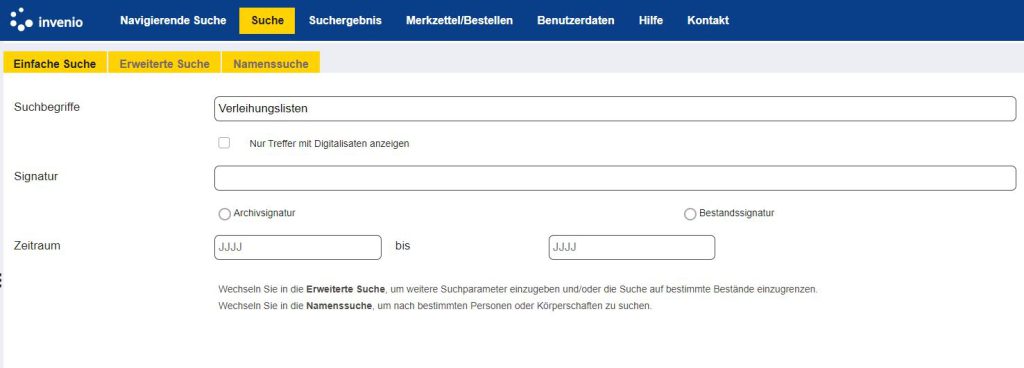
The third option is “Namensuche”, (Name search) that tab is the one we use most of all. Especially when we are looking for officers. To make it understandable for you, we are searching for “Otto Weidinger”, be sure to also enter the year of birth, otherwise you will get a number of different “Otto Weidinger”, we are after all looking for SS-Ostubaf Otto Weidinger born in 1914, when we increase him we get 4 different hits, and now it comes to the clever part.
The first hit is called “R 9361-III/220148 Weidinger Otto” and then there is a lot that, among other things, “Sammlung Berlin Document Center (BDC) Personenbezogene Unterlagen der SS und SA” After that there is a new line with a similar number “R 9361-III/562565” and then the same text as the first line. But what separates them is that the first one has under “Unterlagenart” the name “Sachakte” and the one below has the name “personalakte” it shows us there that the first “sachakte” is his SS-RuSHA file (marriage application) and “Personalakte” is his SSO (SS-Officersakt).
Under these two you will then find a folder called “B 305/4054” which is stored at the Bundesarchiv in Koblenz, this file is his process after the war where his category in the process of De-Nazification that was carried out after the war took place. I have studied a number of these and they are actually completely worthless in my humble opinion. They show how they were “absolutely NOT Nazis” they had only joined because it was good for their careers” and how “they all helped Jews”.
The fourth and last one is a folder collected at the Bundesarchiv in Freiburg (Militär archive) and deals only with his awards of the Knight’s Cross, Oak Leaf and Sword.
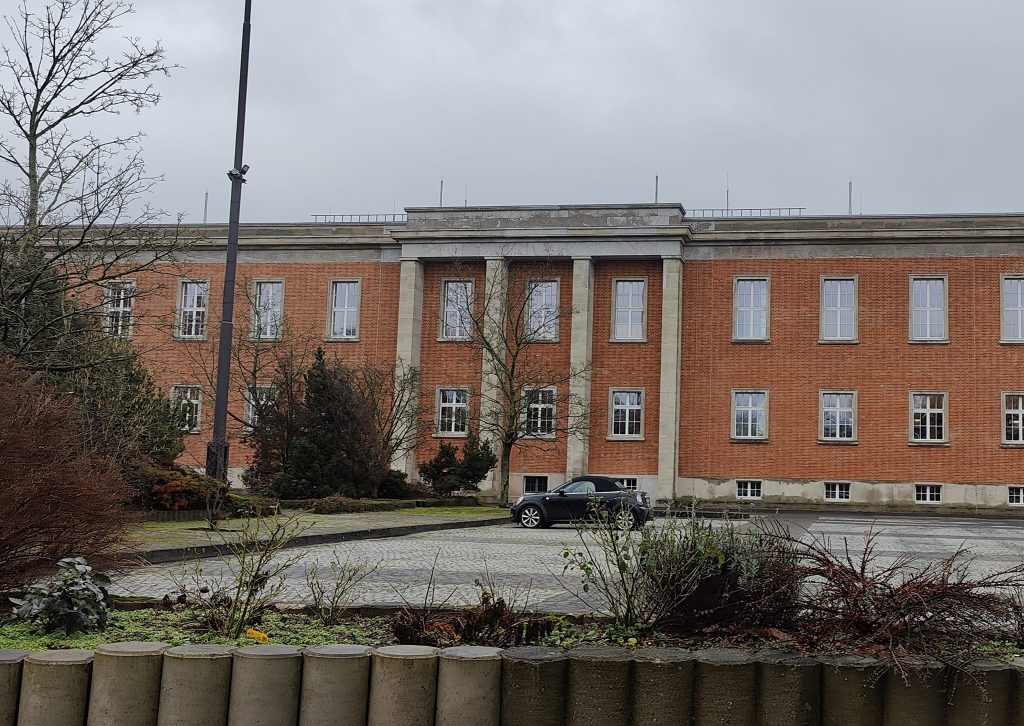
With this, I came up with telling you about the different branches within the Bundesarchiv. Berlin Lichterfelde has files that only relate to the SS, SA and NSDAP, the Bundesarchiv Koblenz has files that relate to De-Nazification and Photos, they have e.g. all SS-Kriegsberichter photos stored there. The Bundesarchiv Freiburg stores everything related to the military, including the Waffen-SS (divisions, battalions, etc.) In Freiburg you will also find all personnel files for the Wehrmacht, Luftwaffe and Kriegsmarine. I used this archive to bring out officers who were also officers in the Allgemeine-SS.
The Bundesarchiv Ludwigsburg has all the files relating to war crimes, currently an under-researched area, but it is high on my “to do list”
With this I conclude part one of this series of articles.
How to write an essay about World War II
World War II was a vast and complex conflict, spanning several years and involving multiple nations. Rather than attempting to cover the entirety of the war, it’s best to narrow your focus to a specific aspect or event. This will allow you to delve deeper into the subject matter and present a more comprehensive analysis. If you’re still struggling to narrow down your topic or need assistance with the writing process, you can consider utilizing essay writing services like Ukwritings. Ukwritings is a professional writing service that can help students with various stages of the essay writing process, from topic selection and research to drafting and editing. Here are some practical steps to help you craft a compelling essay on this significant historical event:
- Choose a Focused Topic
World War II was a vast and complex conflict, spanning several years and involving multiple nations. Rather than attempting to cover the entirety of the war, it’s best to narrow your focus to a specific aspect or event. This will allow you to delve deeper into the subject matter and present a more comprehensive analysis. Examples of potential topics include:
- The Battle of Stalingrad
- The Manhattan Project and the development of the atomic bomb
- The Holocaust and its impact
- The role of women during the war
- The Normandy Invasion (D-Day)
- Conduct Thorough Research
Once you’ve selected your topic, it’s time to gather information from reliable sources. Start by consulting reputable books, academic journals, and primary sources such as eyewitness accounts, official documents, and historical archives. If you’re struggling to find relevant literature, consider utilizing literature review writing services, which can provide you with a comprehensive overview of existing scholarship on your topic. This can be especially helpful if you’re applying for scholarships or grants related to your research. Online resources can also be valuable, but be cautious of unreliable or biased sources. Take meticulous notes and organize your research materials in a logical manner. This will make it easier for you to synthesize the information and develop a cohesive argument or narrative.
- Develop a Clear Thesis Statement
Your thesis statement is the foundation of your essay. It should concisely convey the main argument or central idea you aim to explore. A strong thesis statement will guide your research, structure your essay, and help you stay focused throughout the writing process. For example, if your topic is the Battle of Stalingrad, your thesis statement could be: “The Battle of Stalingrad was a turning point in World War II, demonstrating the resilience of the Soviet people and the strategic brilliance of their military leadership.”
- Craft an Engaging Introduction
The introduction is your chance to captivate your reader’s attention and provide context for your essay. Start with a compelling hook, such as a thought-provoking quote or a vivid description of a key event. Then, briefly introduce your topic and present your thesis statement. Remember, your introduction should be concise and focused, setting the stage for the body of your essay.
- Organize Your Body Paragraphs
The body of your essay should be structured logically, with each paragraph covering a specific point or aspect of your argument. Use topic sentences to introduce the main idea of each paragraph, and support your claims with evidence from your research. Incorporate quotes, statistics, and historical examples to strengthen your arguments. Additionally, consider addressing counterarguments or alternative perspectives to demonstrate a well-rounded understanding of the topic.
- Provide Insightful Analysis
While presenting factual information is crucial, it’s equally important to provide your own analysis and insights. Discuss the significance of the events you’re describing and how they impacted the broader context of World War II. Draw connections between different aspects of the war, and offer your unique perspective on the subject matter.
- Craft a Powerful Conclusion
Your conclusion should leave a lasting impression on your reader. Summarize your main points and restate your thesis statement, but do so in a way that reinforces the significance of your argument. You may also consider including a thought-provoking question or a call to action that encourages further reflection or discussion.
- Edit and Proofread
After completing your first draft, take a break and revisit your essay with fresh eyes. Check for logical flow, coherence, and clarity. Ensure that your arguments are well-supported and that your writing is free of errors in grammar, spelling, and punctuation. Consider having someone else read your essay and provide feedback. An outside perspective can often identify areas for improvement that you may have overlooked.
Remember, writing an essay about World War II is not just about presenting facts; it’s about telling a compelling story and offering insightful analysis. By following these steps and maintaining a focused and engaging approach, you can create a thought-provoking and informative essay that sheds light on this pivotal moment in history.